
In Asian American, Native Hawaiian, and Pacific Islander Heritage Month, UH Cancer Center spotlights targeted community outreach, research
Center studies illuminate cancer trends in Hawaiʻi’s ethnic groups, while programs aim to prevent cancer through culturally appropriate connections
May 29, 2026
While the nation approaches the conclusion of Asian American, Native Hawaiian and Pacific Islander (AANHPI) Heritage Month, the University of Hawaiʻi Cancer Center is highlighting its year-round, longstanding commitment to improving cancer outcomes for the communities it serves across the Pacific region, through groundbreaking research, community engagement, and culturally responsive programs.
As one of only 74 National Cancer Institute-designated cancer centers, and the only one in Hawai‘i and the Pacific region, the UH Cancer Center occupies a unique position in addressing cancer differences that affect Asian American, Native Hawaiian and Pacific Islander populations. The center's goal of “Saving Lives in Hawai‘i and the Pacific” is deeply rooted in Hawaiʻi's multicultural population, where Native Hawaiians, Pacific Islanders and people of Asian ancestry together make up the majority of residents. These populations often experience distinct cancer risks, outcomes, and barriers to care that have historically been underrepresented in national research. For decades, the UH Cancer Center has worked hand-in-hand with community partners to better understand how cancer affects these populations, and to ensure that scientific discoveries lead to meaningful improvements in health.
“With our location, our history and our responsibility as the only NCI-designated cancer center in the Pacific, we have a unique obligation to serve Native Hawaiian, Pacific Islander and Asian communities," said Dr. Naoto T. Ueno, Director of the UH Cancer Center. "The discoveries made here are not only advancing cancer research globally, but also helping ensure that the people of Hawaiʻi and the Pacific benefit from research that reflects their experiences, cultures and health needs. Our commitment extends beyond the laboratory and clinic, into the communities we serve every day.”
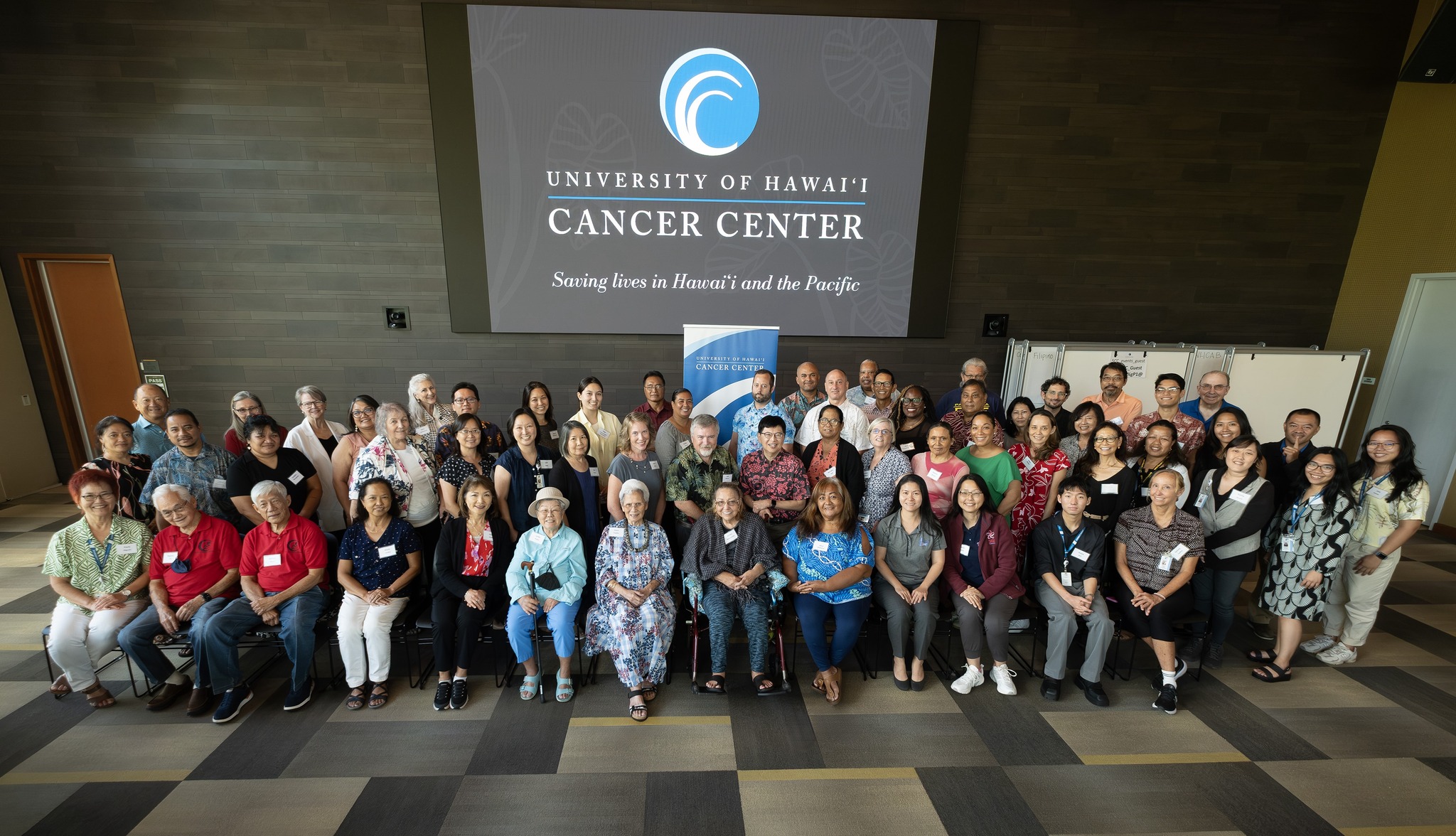
Among the UH Cancer Center’s most significant research contributions:
- The Multiethnic Cohort Study is one of the world's largest and most influential studies examining the relationship between lifestyle, genetics, environment and cancer risk among varied populations. Established in 1993 by researchers from the UH Cancer Center and the University of Southern California, the study includes more than 215,000 participants from Hawaiʻi and California, and has generated hundreds of scientific publications that have transformed understanding of cancer and chronic disease among such groups as Native Hawaiian, Japanese American, African American, Latino and White populations.
- The Hawaiʻi Tumor Registry (HTR) serves as the source for cancer surveillance for Hawai'i and the various population groups within the state. HTR was established in 1960 by the Hawaiʻi Medical Association, the Hawaiʻi State Department of Health, and the Hawaiʻi Pacific Division of the American Cancer Society. The HTR is a funded registry of the National Cancer Institute (NCI) Surveillance, Epidemiology, and End Results (SEER) Program, and one of twenty-eight NCI SEER registries nationwide. HTR’s latest "Cancer at a Glance, 2018-2022" report, released in May 2026, serves as a resource for cancer epidemiology and surveillance by providing breakdowns of cancer types, gender and race. For the first time, this 5-year report was able to disaggregate Pacific Island groups from a larger “Other” group category to shed light on population differences in cancer outcomes.
- The Pacific Island Partnership for Cancer Health for Everyone (PIPCHE) is a partnership between the UH Cancer Center and the University of Guam, established in 2003. This capacity-building partnership aims to improve cancer outcomes among Pacific Islanders in Hawaiʻi, Guam and the neighboring U.S. Associated Pacific Islands (USAPI) through research funding, training of students and Early Stage Investigators, and community outreach.
Among the UH Cancer Center’s efforts through its Community Outreach & Engagement office:
- The UH Cancer Center’s Kū Ola Program, in partnership with Ke Ola Mamo, the Native Hawaiian Health Care System of Oʻahu, aims to improve the health and well-being of Native Hawaiian kāne (men) living in Hawai‘i. This is achieved through funding for Native Hawaiian-focused research, modules to raise awareness regarding colorectal and prostate cancer, training of community members through education and community engagement, tailored resources, and a mobile clinic.
- Various Advisory Boards serve as leaders and guides for the research conducted at the UH Cancer Center. The Native Hawaiian Advisory Board is composed of respected community leaders, health professionals, and cultural experts, and it guides UH Cancer Center research affecting the Native Hawaiian community. The Pacific Island Community Advisory Board is composed of respected community leaders, health professionals, religious leaders and cultural experts, and provides input on UH Cancer Center projects affecting Pacific Islanders. Additionally, the Patient Advisory Council and the Community Advisory Board include members of AANHPI communities who are key cancer-control stakeholders who advocate for cancer patients and caregivers, as well as provide guidance for activities and research conducted at the UH Cancer Center.
In addition, the UH Cancer Center is actively working to “fulfill kuleana to Native Hawaiians and Hawai‘i,” and evolve as an indigenous-serving institution, as stipulated in the UH System’s UH Strategic Plan 2023-2029. This includes developing a long-range plan, in cooperation with the UH Native Hawaiian Place of Learning Advancement Office, to become a Native Hawaiian place of learning — one that is responsive to all people who call Hawaiʻi home, and reflective of Hawaiʻi’s culture, language, history, principles, values, and worldviews.


