Horizontal-Lockup.jpg

This archived content created prior to April 24, 2026 is being made available for reference, research, or recordkeeping purposes only and may not meet current web content accessibility standards. If required, an accessible version of this content can be made on request.

This year marks the 50th anniversary of the University of Hawaiʻi Cancer Center. The UH Cancer Center has proven itself to be an invaluable asset to the state since its founding in 1971. The Cancer Center has made seminal discoveries in the areas of cancer biology, epidemiology, cancer prevention, and treatment, and contributed to the advanced health care for thousands of cancer patients to gain access to the most innovative and latest clinical trials at home in Hawaiʻi.
The UH Cancer Center is driven by its mission to reduce the burden of cancer through research, education, improved patient care and community outreach with an emphasis on the unique ethnic, cultural and environmental characteristics of Hawaiʻi and the Pacific. Now in its 25th year of continuous designation by the National Cancer Institute, it has earned its place as one of the leading cancer research institutions in the world.
"I'm proud of the achievements the UH Cancer Center together with our researchers, staff, and our partners have reached in this half century of our existence," said UH Cancer Center Director Randall Holcombe. "Cancer research has come a long way to improving the survival and the quality of life of our patients and their families. As we look toward the future, we will continue to develop new strategies for discovery, drive findings into clinical practice, and deliver the best possible outcomes when patients are faced with the prospect of treatment for cancer."
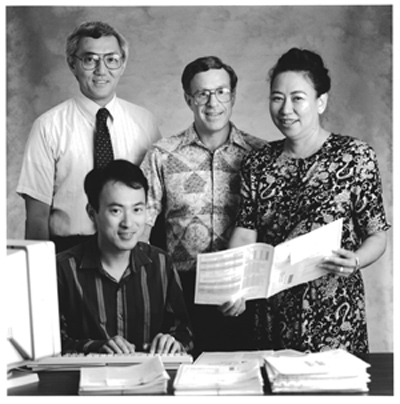
The UH Cancer Center is an organized research unit within UH Mānoa that was originally part of the Pacific Biosciences Research Center before it was established as its own independent research institute by the UH Board of Regents in 1971.
Its state-of-the-art facility, now located in Kakaʻako, was completed in 2013, and is home to 300 research faculty and staff, including some of the nation's leading cancer experts. In addition, another 200 affiliate members are engaged with the UH Cancer Center through the Hawaiʻi Cancer Consortium, a unified effort in clinical cancer research benefiting the people of Hawaiʻi and the Pacific Rim.
Since 2016, 16,623 participants have been enrolled in cancer clinical trials through the UH Cancer Center, and currently more than 100 research projects in its two research programs, Population Sciences in the Pacific and Cancer Biology are being conducted.
UH Cancer Center researchers focus on key cancer types that significantly impact communities in Hawaiʻi and the Pacific. Yet just as importantly, their work contributes to a global body of knowledge that leads to the development of innovative cancer prevention and control strategies, as well as novel life-saving therapies and interventions for all types of cancers.
Since 1993, the Multiethnic Cohort (MEC) Study, the largest and most ethnically diverse epidemiologic cancer study of its kind with 215,000 participants from Hawaiʻi and California, has collected data to investigate the roles that lifestyle, diet, and genetics play in cancer and other chronic diseases.
The center also engages in scientific collaborations on a national and international scale, ranging from clinical trials and other research conducted across the U.S. to partnership programs and research collaborations in Guam, the U.S. Affiliated Pacific Islands, Australia, Asia and Europe.

As the central cancer education and training hub for Hawaiʻi and the Pacific, the UH Cancer Center provides innovative training and mentorship opportunities for individuals at every age and stage of their career. Two new education initiatives were successfully kicked off in 2020: the CREATE program and the Clinical Research Professionals (CRP) Certificate Program.
Other key research initiatives include the development of an Early Phase Clinical Research Center (EPCRC) and an Organoid Generation Facility. The EPCRC will allow cancer patients to participate in Phase I trials without having to travel to the mainland. The organoid facility will provide a vital resource to the study of cancer in minority populations with significant cancer disparities.
Throughout 2021, look out for more on the UH Cancer Center as it reflects on 50 years of progress and looks toward the next 50 years to bring forth even more innovations in research and cancer care.
Watch more 50th anniversary highlights in the video below:
###
About the University of Hawaiʻi Cancer Center
The University of Hawaiʻi Cancer Center is dedicated to saving lives in Hawaiʻi and the Pacific, and inspiring hope by working to conquer cancer. The flagship priority is to understand and address cancer health disparities. The center strives to achieve this through research, education, patient care, and community outreach, focusing on the unique and diverse ethnic, cultural, and environmental characteristics of Hawaiʻi and the Pacific.
The UH Cancer Center is one of only 74 institutions designated by the National Cancer Institute (NCI), representing a significant mark of excellence, and is the only NCI-designated cancer center in Hawaiʻi and the Pacific. The center contributes more than $57 million to Hawaiʻi's economy through scientific research, clinical trials, and other activities.
As part of the University of Hawaiʻi at Mānoa, the UH Cancer Center operates out of facilities located in Kakaʻako. The center directly employs more than 300 faculty and staff, with an additional 200 affiliate members and cooperative agreements with organizations that are part of the Hawaiʻi Cancer Consortium. The consortium includes The Queen’s Health Systems, Hawaiʻi Pacific Health, Kuakini Medical Center, Adventist Health Castle, Hawaiʻi Medical Service Association (HMSA), and the John A. Burns School of Medicine (JABSOM), all working together with the UH Cancer Center to advance cancer research and treatment in the state.
Learn more at https://www.uhcancercenter.org | Connect with us on Facebook | Instagram | X | LinkedIn