Horizontal-Lockup.jpg

Center studies illuminate cancer trends in Hawaiʻi’s ethnic groups, while programs aim to prevent cancer through culturally appropriate connections
While the nation approaches the conclusion of Asian American, Native Hawaiian and Pacific Islander (AANHPI) Heritage Month, the University of Hawaiʻi Cancer Center is highlighting its year-round, longstanding commitment to improving cancer outcomes for the communities it serves across the Pacific region, through groundbreaking research, community engagement, and culturally responsive programs.
As one of only 74 National Cancer Institute-designated cancer centers, and the only one in Hawai‘i and the Pacific region, the UH Cancer Center occupies a unique position in addressing cancer differences that affect Asian American, Native Hawaiian and Pacific Islander populations. The center's goal of “Saving Lives in Hawai‘i and the Pacific” is deeply rooted in Hawaiʻi's multicultural population, where Native Hawaiians, Pacific Islanders and people of Asian ancestry together make up the majority of residents. These populations often experience distinct cancer risks, outcomes, and barriers to care that have historically been underrepresented in national research. For decades, the UH Cancer Center has worked hand-in-hand with community partners to better understand how cancer affects these populations, and to ensure that scientific discoveries lead to meaningful improvements in health.
“With our location, our history and our responsibility as the only NCI-designated cancer center in the Pacific, we have a unique obligation to serve Native Hawaiian, Pacific Islander and Asian communities," said Dr. Naoto T. Ueno, Director of the UH Cancer Center. "The discoveries made here are not only advancing cancer research globally, but also helping ensure that the people of Hawaiʻi and the Pacific benefit from research that reflects their experiences, cultures and health needs. Our commitment extends beyond the laboratory and clinic, into the communities we serve every day.”
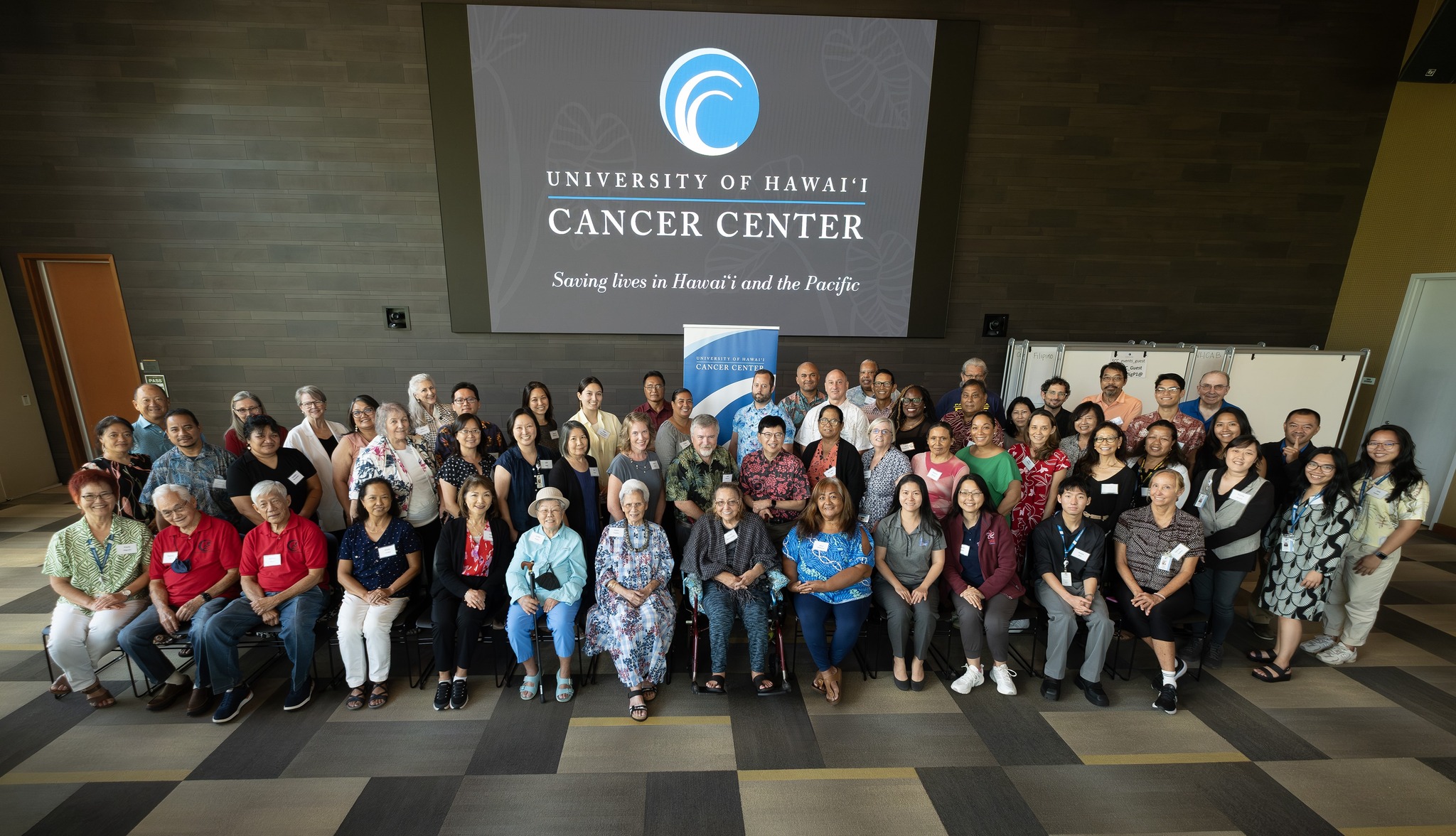
In addition, the UH Cancer Center is actively working to “fulfill kuleana to Native Hawaiians and Hawai‘i,” and evolve as an indigenous-serving institution, as stipulated in the UH System’s UH Strategic Plan 2023-2029. This includes developing a long-range plan, in cooperation with the UH Native Hawaiian Place of Learning Advancement Office, to become a Native Hawaiian place of learning — one that is responsive to all people who call Hawaiʻi home, and reflective of Hawaiʻi’s culture, language, history, principles, values, and worldviews.
###
About the University of Hawaiʻi Cancer Center
The University of Hawaiʻi Cancer Center is dedicated to saving lives in Hawaiʻi and the Pacific, and inspiring hope by working to conquer cancer. The flagship priority is to understand and address cancer health disparities. The center strives to achieve this through research, education, patient care, and community outreach, focusing on the unique and diverse ethnic, cultural, and environmental characteristics of Hawaiʻi and the Pacific.
The UH Cancer Center is one of only 74 institutions designated by the National Cancer Institute (NCI), representing a significant mark of excellence, and is the only NCI-designated cancer center in Hawaiʻi and the Pacific. The center contributes more than $57 million to Hawaiʻi's economy through scientific research, clinical trials, and other activities.
As part of the University of Hawaiʻi at Mānoa, the UH Cancer Center operates out of facilities located in Kakaʻako. The center directly employs more than 300 faculty and staff, with an additional 200 affiliate members and cooperative agreements with organizations that are part of the Hawaiʻi Cancer Consortium. The consortium includes The Queen’s Health Systems, Hawaiʻi Pacific Health, Kuakini Medical Center, Adventist Health Castle, Hawaiʻi Medical Service Association (HMSA), and the John A. Burns School of Medicine (JABSOM), all working together with the UH Cancer Center to advance cancer research and treatment in the state.
Learn more at https://www.uhcancercenter.org | Connect with us on Facebook | Instagram | X | LinkedIn