Horizontal-Lockup.jpg

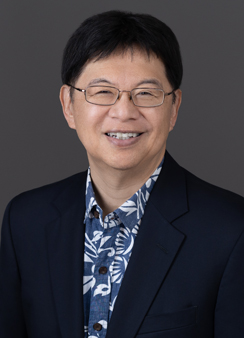
This op-ed written by UH Center Center Director Naoto T. Ueno appeared in The Honolulu Star-Advertiser on January 19, 2025.
For more than 50 years, the University of Hawaiʻi Cancer Center has been at the forefront of preventing and treating cancer. Our work has saved countless lives by uncovering the causes of cancer across different ethnicities, improving detection and developing novel treatments. These breakthroughs have translated into better care for patients across Hawaiʻi and beyond. And we have exciting plans for growth.
However, despite our undeniable progress, we are spending precious time and resources worrying about how to fund our operations, instead of on advancing cancer research and saving lives.
For decades, the state has invested in the UH Cancer Center by allocating a portion of the cigarette excise tax to support our work. While the decline in smoking rates — a result of public education and strong policies — is a victory for public health, this has resulted in the reduction of a vital funding stream for the UH Cancer Center, Hawaiʻi’s only National Cancer Institute-designated cancer center.
Nearly 10 years ago, Hawaiʻi became the first state to raise the legal age for tobacco sales to 21. We initially received $20 million annually from tobacco sales to support building bonds, operational costs and life-saving research. But today, our allocation is down to just $8 million — an amount that is insufficient after accounting for building bonds alone.
The entire tobacco industry has benefited from increased retail prices, yet the tax rate has remained stagnant for 13 years. This has allowed the tobacco industry to reap profits while essential cancer prevention and treatment efforts struggle for funding. It’s time to address this disparity and provide the resources necessary to continue the fight against cancer.
The UH Cancer Center proposed raising the cigarette tax last year, and we will request this again in the current legislative session to increase the cigarette excise tax from 16 cents to 18 cents per cigarette. Such a modest 2-cent increase — which would be the first in more than a decade — could stabilize our funding and allow us to focus on advancing cancer prevention, diagnosis and treatment for the people of Hawaiʻi.
Some may voice concerns, particularly small retailers who worry about the impact on their businesses or fear increased theft or black-market activity. However, the cost of inaction far outweighs these concerns. Cancer knows no boundaries, and without proper funding, we risk undermining our ongoing progress in cancer prevention and care. In Hawaiʻi, we lose 2,300 residents to cancer annually, and one-quarter of these deaths are linked to smoking.
The UH Cancer Center generated $41 million in grants and contracts in fiscal year 2024, a remarkable achievement for an institution of our size. We collaborate with Hawaiʻi’s major health care providers and provide unparalleled service to patients across the state and the U.S.-affiliated Pacific Islands. In October, we renewed our status as an NCI-designated cancer center, held since 1996, a prestigious distinction placing us among the top 4% of cancer centers nationwide.
However, the UH Cancer Center’s ability to retain this coveted designation and continue providing world-class care is at risk due to the lack of adequate public funding. No NCI-designated cancer center operates without public investment. Our community deserves the best level of care and innovation.
A 2-cent increase in the cigarette tax is a small investment with a profound return. It allows us to focus on what we do best: fighting cancer and saving lives. As the saying goes, an ounce of prevention is worth a pound of cure. In this case, prevention and progress cost just two pennies.
###
About the University of Hawaiʻi Cancer Center
The University of Hawaiʻi Cancer Center is dedicated to saving lives in Hawaiʻi and the Pacific, and inspiring hope by working to conquer cancer. The flagship priority is to understand and address cancer health disparities. The center strives to achieve this through research, education, patient care, and community outreach, focusing on the unique and diverse ethnic, cultural, and environmental characteristics of Hawaiʻi and the Pacific.
The UH Cancer Center is one of only 74 institutions designated by the National Cancer Institute (NCI), representing a significant mark of excellence, and is the only NCI-designated cancer center in Hawaiʻi and the Pacific. The center contributes more than $57 million to Hawaiʻi's economy through scientific research, clinical trials, and other activities.
As part of the University of Hawaiʻi at Mānoa, the UH Cancer Center operates out of facilities located in Kakaʻako. The center directly employs more than 300 faculty and staff, with an additional 200 affiliate members and cooperative agreements with organizations that are part of the Hawaiʻi Cancer Consortium. The consortium includes The Queen’s Health Systems, Hawaiʻi Pacific Health, Kuakini Medical Center, Adventist Health Castle, Hawaiʻi Medical Service Association (HMSA), and the John A. Burns School of Medicine (JABSOM), all working together with the UH Cancer Center to advance cancer research and treatment in the state.
Learn more at https://www.uhcancercenter.org | Connect with us on Facebook | Instagram | X | LinkedIn