Horizontal-Lockup.jpg

A new type of immunotherapy treatment for cancer patients, Chimeric Antigen Receptor (CAR) T-cell therapy, was recently made available in Hawaiʻi through a partnership between the University of Hawaiʻi Cancer Center and Hawaiʻi Pacific Health (HPH).
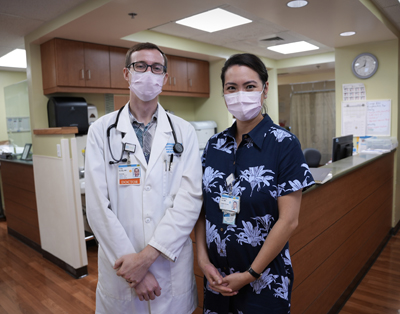
This new treatment allows some of the sickest cancer patients to stay in Hawai‘i with family and friends for care instead of traveling to the mainland.
“CAR T-cell therapy is a very innovative and specialized type of cellular immunotherapy where we're able to use a patient’s own immune cells, genetically modify them, and use those modified cells to fight cancer,” said UH Cancer Center Assistant Researcher Stephanie Si Lim, who is a pediatric hematologist/oncologist at Kapiʻolani Medical Center for Women & Children and medical director of the cellular immunotherapy program at HPH. “It is very different from traditional chemotherapy because it targets cancer cells with more precision.”
 Lim has spent the last two-and-a-half years building the cellular immunotherapy program at the UH Cancer Center and HPH. CAR T-cell therapy is now offered to children with B-cell acute lymphoblastic leukemia and adults with B-cell lymphoma and multiple myeloma. Here are a few milestones of this breakthrough program for the state:
“Through HPH and the UH Cancer Center’s joint efforts, we are excited to offer this important and lifesaving therapy to patients with difficult-to-treat cancers,” Lim said. “We look forward to our ongoing collaboration to expand the availability of groundbreaking FDA-approved oncology products and clinical trials for our community here in Hawaiʻi."
###
About the University of Hawaiʻi Cancer Center
The University of Hawaiʻi Cancer Center is dedicated to saving lives in Hawaiʻi and the Pacific, and inspiring hope by working to conquer cancer. The flagship priority is to understand and address cancer health disparities. The center strives to achieve this through research, education, patient care, and community outreach, focusing on the unique and diverse ethnic, cultural, and environmental characteristics of Hawaiʻi and the Pacific.
The UH Cancer Center is one of only 74 institutions designated by the National Cancer Institute (NCI), representing a significant mark of excellence, and is the only NCI-designated cancer center in Hawaiʻi and the Pacific. The center contributes more than $57 million to Hawaiʻi's economy through scientific research, clinical trials, and other activities.
As part of the University of Hawaiʻi at Mānoa, the UH Cancer Center operates out of facilities located in Kakaʻako. The center directly employs more than 300 faculty and staff, with an additional 200 affiliate members and cooperative agreements with organizations that are part of the Hawaiʻi Cancer Consortium. The consortium includes The Queen’s Health Systems, Hawaiʻi Pacific Health, Kuakini Medical Center, Adventist Health Castle, Hawaiʻi Medical Service Association (HMSA), and the John A. Burns School of Medicine (JABSOM), all working together with the UH Cancer Center to advance cancer research and treatment in the state.
Learn more at https://www.uhcancercenter.org | Connect with us on Facebook | Instagram | X | LinkedIn