Horizontal-Lockup.jpg

Liver cancer is the fourth deadliest cancer in Hawaiʻi, particularly affecting Native Hawaiian, Filipino, and Japanese men. Currently, immunotherapy, a treatment that uses a person's immune system to fight cancer, is the standard of care for liver cancer patients. However, it is not a cure for liver cancer, as many patients continue to relapse or have minimal effects after receiving treatment.
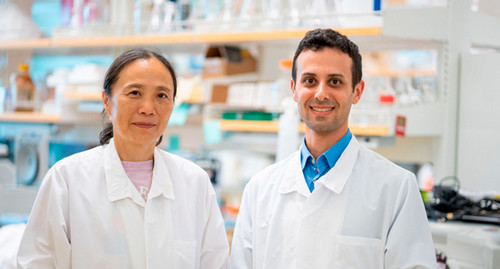
Cancer vaccines are a promising treatment option that can stimulate the body's natural anti-cancer immune system. However, previous clinical trials using vaccines to treat liver cancer have been unsuccessful. Benjamin Green, MD, Liver Cancer Research Specialist at the University of Hawaiʻi Cancer Center, under the mentorship of Xin Chen, PhD, UH Cancer Center researcher and co-leader of the Cancer Biology Program, published a study in the Journal of Clinical Investigation, which found that the combination of a cancer vaccine and immunotherapy caused the immune system to kill tumors in mice with liver cancer. The results provided a solid base for initiating a clinical trial of this anti-cancer vaccine in human patients in the near future.
"This is an exciting discovery and one that will hopefully translate into a new immunotherapy treatment option for our patients," said Jared Acoba, MD, UH Cancer Center researcher and Director of Research at the Cancer Center at The Queen's Medical Center.
Byron Rodrigues, a patient of Acoba, was diagnosed with hepatocellular carcinoma in 2018. Upon diagnosis, Rodrigues immediately received surgery to remove the cancer, however the cancer returned the following year. "These new findings will allow patients to be confident in living their lives without having to worry as much about relapsing. By having a better assurance of cancer treatment, patients, as well as family members, would have a better piece of mind and live life moving forward," said Rodrigues.
Additionally, Green received funding from the Cholangiocarcinoma Foundation to develop a new cancer vaccine concept for treating cholangiocarcinoma, a rare but highly aggressive type of liver cancer in which standard treatments are ineffective. "I am very excited to apply lessons from our recent publication toward developing another cancer vaccine for this deadly type of liver cancer," said Green.
###
About the University of Hawaiʻi Cancer Center
The University of Hawaiʻi Cancer Center is dedicated to saving lives in Hawaiʻi and the Pacific, and inspiring hope by working to conquer cancer. The flagship priority is to understand and address cancer health disparities. The center strives to achieve this through research, education, patient care, and community outreach, focusing on the unique and diverse ethnic, cultural, and environmental characteristics of Hawaiʻi and the Pacific.
The UH Cancer Center is one of only 74 institutions designated by the National Cancer Institute (NCI), representing a significant mark of excellence, and is the only NCI-designated cancer center in Hawaiʻi and the Pacific. The center contributes more than $57 million to Hawaiʻi's economy through scientific research, clinical trials, and other activities.
As part of the University of Hawaiʻi at Mānoa, the UH Cancer Center operates out of facilities located in Kakaʻako. The center directly employs more than 300 faculty and staff, with an additional 200 affiliate members and cooperative agreements with organizations that are part of the Hawaiʻi Cancer Consortium. The consortium includes The Queen’s Health Systems, Hawaiʻi Pacific Health, Kuakini Medical Center, Adventist Health Castle, Hawaiʻi Medical Service Association (HMSA), and the John A. Burns School of Medicine (JABSOM), all working together with the UH Cancer Center to advance cancer research and treatment in the state.
Learn more at https://www.uhcancercenter.org | Connect with us on Facebook | Instagram | X | LinkedIn